




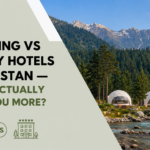



The phone signal drops somewhere on the road up. Most guests report this as the moment the trip actually begins.
The idea of a digital detox has become slightly absurd in the way that all wellness trends do when they’re over-branded: retreats with scheduled phone-locking ceremonies, apps for tracking your offline time, social media posts about disconnecting. The irony is built in and everyone knows it.
The actual thing, the genuine experience of being unreachable, unscheduled, and outside the feed for two consecutive days, remains as valuable as it ever was, and considerably rarer than it used to be. Pakistan’s mountain forest stays are one of the most structurally effective ways to access it, and not by design. By geography.
Why mountain forest stays work when willpower doesn’t
The problem with most attempts at digital detox is that they rely on self-discipline in an environment where every friction has been removed in favour of convenience. Your phone is in your pocket. The wifi is fast. The notifications continue. The intention to not look is undermined by every design choice in the environment around you.
A forest stay in the mountains changes the environment rather than your behaviour. Signal in forest locations in northern Pakistan is variable at best and absent at worst,not as a curated feature of the experience, but simply because the terrain makes it so. The wifi, where it exists, is functional rather than fast. There is no channel of distraction that works reliably.
The result, for most guests, is not the anxious withdrawal they feared but something closer to relief. The decision has been made for them by the landscape, and the first few hours of genuine absence from the feed produce an effect that is measurably different from merely intending to be offline.
What actually happens when you properly disconnect
Research on nature immersion and digital disconnection is consistent on a few points: time perception changes, attention span lengthens, and the particular exhaustion that comes from continuous partial attention, the baseline state of most working adults in cities, begins to lift after roughly twelve to eighteen hours of genuine removal from screens.
What this looks like in practice at a forest stay:
- The first evening, you notice how much you reach for your phone out of habit rather than need
- By morning, the reaching stops and you start noticing the environment instead
- By the second day, conversations go longer, meals take more time, and the light changing on the pine canopy becomes genuinely interesting rather than background
- On the drive back, the return of signal feels like an imposition rather than a relief
Which accommodation type works best for a digital detox
Dome stays
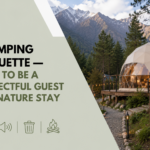
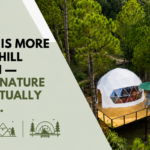
The dome format suits digital detox particularly well because the primary experience, lying in a warm bed watching the night sky, requires no phone and actively competes with it.
Wooden huts
For guests who find the dome format too minimal, a wooden hut in the forest offers the warmth and enclosure of a traditional cabin experience. The tactile quality of timber interiors, the smell, the texture, the sounds of a wooden structure in wind, creates a sensory environment that is genuinely grounding in a way that glass and metal cannot replicate.
Pods
The compact scale of a pod stay is well-suited to solo digital detox. The small, considered interior removes the option of spreading out and being comfortable with a device, the space is designed for being present, not for working or scrolling.
Practical preparation for a mountain detox stay
The most useful thing to do before a digital detox stay is not to set an intention but to handle the practicalities: inform whoever needs to know that you’ll be unreachable, download any offline reading or music you want, and tell yourself, honestly, that nothing requiring your immediate attention will arise in forty-eight hours that cannot wait. It almost never does, and knowing this is the most effective preparation available.
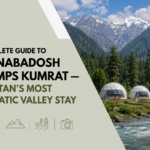
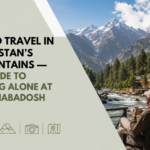
Khanabadosh properties are positioned specifically in areas where the natural environment dominates, forest clearings, riverfront, mountain positions, elevated sites with views that make the inside of a phone feel like the inferior option. This is not a curated retreat program. It is a well-placed, well-appointed nature stay that does what the landscape allows it to do.
What is a digital detox retreat in Pakistan?
A digital detox retreat in Pakistan refers to a stay, typically in a mountain or forest environment, where limited phone signal, absence of fast wifi, and a natural setting combine to reduce screen dependency without requiring active willpower. Forest glamping properties in the northern region naturally provide this through geography rather than structured programming.
Is there phone signal at Khanabadosh Glamps?
Signal at mountain forest properties in northern Pakistan is variable depending on the specific location and network provider. Some areas have partial signal; others have very limited connectivity. This is worth confirming with the property before booking, particularly if you need to remain contactable for emergencies.
How long does a digital detox stay need to be to feel a difference?
Most guests notice a meaningful shift in mental state after eighteen to twenty-four hours of genuine disconnection in a natural environment. A two-night stay is the recommended minimum, one night is often not long enough for the initial adaptation period to pass and the deeper rest to begin.
What do you do on a digital detox stay in the mountains?
Less than you expect, and more satisfyingly than that sounds. Forest walks, reading, long meals, conversations without competing distractions, stargazing, and the specific pleasure of watching light move through a pine canopy for longer than you would normally allow yourself to. The absence of digital noise makes the natural environment noticeably more present and interesting.