



Everything you need to know before your first luxury nature stay in Pakistan’s northern mountains.
Pakistan’s mountain regions are among the most dramatic landscapes on earth. The valleys dropping away from Patriata toward the plains, and riverfront valleys in Kumrat hugged by lush green forests and towering mountains, are not supporting scenery. They are the point.
If you are planning your first mountain stay in Pakistan and trying to understand the options, the differences between accommodation types, the right seasons, and what the experience actually involves, this guide covers all of it plainly.
Understanding the accommodation landscape
Mountain stays in Pakistan have diversified significantly in recent years. Where once the choice was between a hotel and a tent, there is now a full spectrum of nature-stay accommodation, each with a different format, sensory quality, and experiential character. Understanding the differences is the most important first step in booking the right stay.
Luxury dome stays
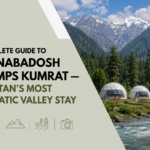
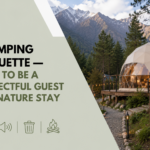
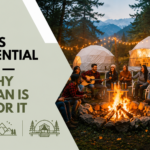
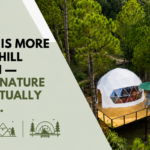
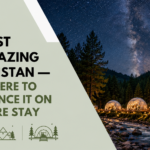
Geodesic dome structures placed in forest clearings or elevated mountain positions are the most architecturally distinctive option and the most suitable for guests whose primary draw is the night sky and a visually dramatic interior. Full private bathrooms, heating, and hotel-grade bedding are standard at premium properties like Khanabadosh Glamps.
Best for: couples, honeymoon travelers, Gen Z and millennial guests prioritising a memorable and photogenic stay.
Wooden hut stays
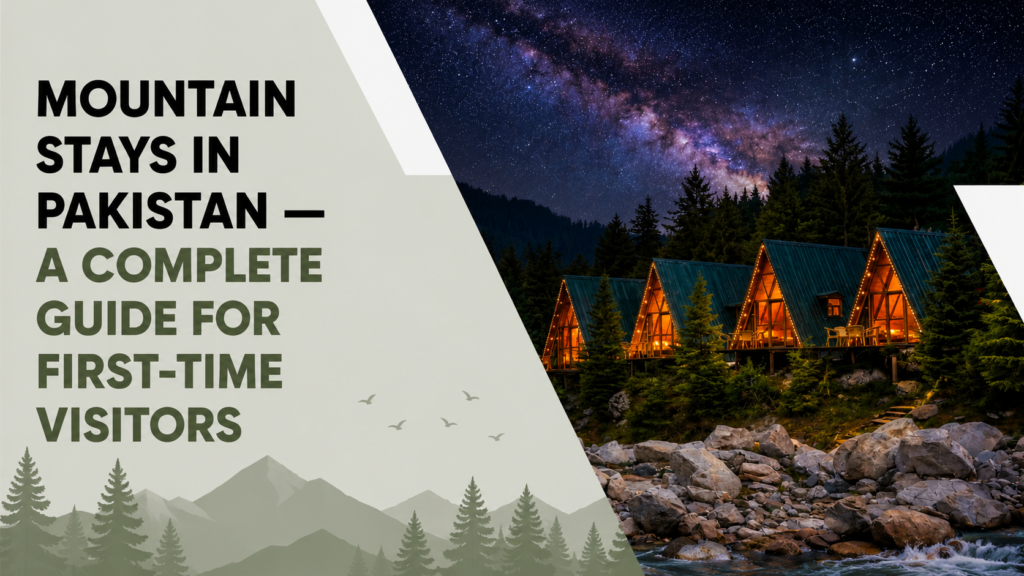
Timber-constructed accommodation in forest settings. The material quality, smell, sound, thermal character, differentiates the experience from glass or composite structures. Warmer in feel and more enclosed than a dome, a wooden hut suits guests who value coziness and natural material immersion over visual drama. Also, the most seasonally versatile format, well-suited to winter stays.
Best for: couples seeking warmth over spectacle, autumn and winter visitors, guests who prefer natural materials.
Pod stays
Compact, self-contained units with a small footprint and precisely designed interiors. The intimate scale suits solo travelers and couples who prefer designed compactness to conventional room size. Pods typically face the forest directly; the natural environment is the view and the primary experience.
Best for: solo travelers, couples who travel light, guests prioritising forest immersion over sky views.
Family and single chalets
Larger-footprint accommodation with multiple sleeping spaces and connected private outdoor areas. Family chalets are the most practical format for groups with children; the sleeping configuration and outdoor space solve the two main challenges of mountain travel with a family. Single chalets offer the chalet experience at a couples or solo scale.
Best for: families with children, groups of three or more, guests who prioritise outdoor living space.
Choosing the right location
Murree and Galiyat
The most accessible mountain region from Islamabad, roughly ninety minutes to two hours by road. Pine forest density is high, the landscape is well-established for tourism, and the infrastructure of the region is mature. The trade-off is popularity: peak summer months bring significant visitor numbers to Murree town specifically, though forest-set stays away from the town centre remain relatively quiet.
Patriata
A ridge above Murree town with forest on all sides and better views across the valley. Less visited than Murree itself and more atmospheric for it. Khanabadosh properties in this area offer the mountain experience without the town-centre congestion that gives some visitors a distorted impression of what the region offers.
“First-time mountain stay visitors consistently underestimate how different the experience is from a conventional hotel. The landscape is not the view from your window. It is the room.”
Seasons, when to go and what to expect
Each season in Pakistan’s northern mountains produces a genuinely different experience, and the right choice depends on what you’re primarily seeking:
- Spring (March to May) — the forest comes alive, temperatures are gentle, and the visitor numbers are low. The best season for first-time visitors who want the full experience without the crowds
- Early summer (June) — green, warm by day, cool by night. Clear enough for good stargazing. The last reliable window before peak season congestion begins
- Peak summer (July to August) — hot in the plains, school holidays, maximum visitor numbers in Murree town. Forest nature stays remain a good choice; the town itself is best avoided on weekends
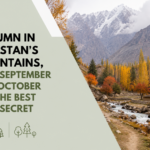
- Autumn (September to October) — the most underrated season. Lower numbers, extraordinary light, cool temperatures. The recommended window for first-time visitors who have flexibility
- Winter (November to February) — snow, stark beauty, full heating required. A genuinely different experience from other seasons and one that rewards guests who specifically seek it
What to pack for a mountain nature stay
- Warm layers — temperatures drop significantly after sunset at altitude regardless of season
- Waterproof outer layer — rainfall is common in the Murree region, particularly July through September
- Walking shoes with grip for forest trails
- Cash — card and ATM infrastructure is limited at forest properties
- Offline maps and any downloaded content — signal is variable in mountain forest locations
- Less than you think you need — nature stays reward simplicity
What to expect on arrival
Khanabadosh Glamps properties are human-scaled rather than resort-scaled. Check-in is personal, you are shown to your accommodation and given a practical walkthrough of the space. There is no lobby, no bellhop, no check-in queue. You arrive, you are oriented, and you are left to it.
Most first-time guests describe the first thirty minutes, unpacking in a dome or wooden hut with the forest immediately outside, as the moment they understood why this is different from a hotel stay. The environment is not accessible through a lobby and a lift. It is the first thing you encounter on arrival, and it does not stop being present for the duration of your stay.
Frequently asked first-timer questions
Before the FAQ section, a few things that come up consistently from first-time mountain stay guests:
- Bathrooms are private and fully equipped at Khanabadosh — this is the most common uncertainty among first-time glamping guests and worth stating clearly. You are not sharing facilities.
- Heating is standard — mountain nights are cold. A property without confirmed heating infrastructure is not a luxury property regardless of how it’s marketed.
- Signal is limited — plan around it rather than against it. Tell whoever needs to know that you’ll be reachable only intermittently.
What is the best mountain stay in Pakistan near Islamabad?
For first-time visitors, luxury nature stays in the Murree and Patriata region offer the best combination of accessibility and experience. Khanabadosh Glamps properties, domes, and wooden huts, are positioned in forest clearings and elevated mountain settings within two hours of Islamabad and represent the premium end of the nature-stay category in this region.
What is the difference between a dome, pod, wooden hut, and chalet stay?
Each format offers a different experiential character: domes prioritise views and architectural drama; pods offer intimate forest immersion in a compact format; wooden huts provide warmth, natural material quality, and seasonal versatility; chalets offer the largest footprint with private outdoor space, best suited to families and groups. All offer equivalent luxury standards at Khanabadosh Glamps.
Is a mountain stay in Pakistan safe for first-time visitors?
Yes. The Murree, Galiyat, and Patriata regions are among Pakistan’s most established tourist destinations with good road access from Islamabad. Khanabadosh Glamps properties are private, well-maintained, and staffed, not remote wilderness camps. The experience is nature-immersive rather than adventure-oriented.
How much does a mountain stay in Pakistan cost?
Pricing varies by accommodation type, season, and specific property. Khanabadosh Glamps is positioned in the premium nature-stay category, above budget camping but generally competitive with mid-to-upper hotel pricing for equivalent nights. The experience differential between a forest dome stay and a standard hotel room is significantly larger than the price differential in most cases.
Do I need to book a mountain stay in Pakistan in advance?
Yes, and particularly for peak months (July to August) and weekends. Nature stays in premium forest positions have limited inventory by definition, there are finite clearings and finite domes. Booking a week or two in advance is advisable for summer; shoulder season stays can often be booked with less lead time.